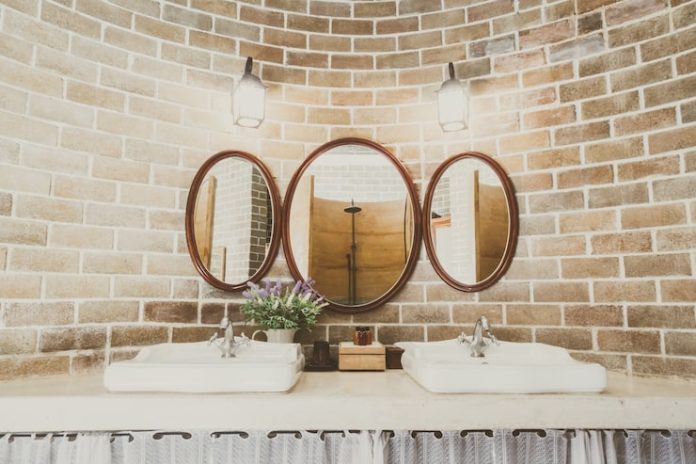

Bathroom light fixtures are one of those elements that most people get wrong — not because they don’t care, but because bathroom lighting seems less important than the tile, the vanity, or the fittings. It isn’t. Lighting affects how you see yourself, how the room feels, how spacious or cramped it seems, and how much you enjoy spending time in the space.
Here’s a complete, practical guide to getting your bathroom light fixtures right.
Understanding the Three Layers of Bathroom Lighting
Good bathroom lighting isn’t achieved by one fixture — it’s a combination of three types, each serving a different purpose:
1. Ambient Lighting
Ambient lighting is the general, overall illumination that fills the room. In most bathrooms, this comes from a ceiling fixture — a flush mount, semi-flush, or recessed downlights. It sets the baseline brightness and should be controllable with a dimmer to allow for different moods and times of day.
2. Task Lighting
Task lighting is directional, focused light for specific activities — primarily grooming at the vanity mirror. This is the most important layer in a bathroom and the one most commonly done wrong. Overhead lighting alone casts downward shadows on the face, which is precisely what you don’t want when applying makeup or shaving.
The best task lighting for bathroom vanities comes from fixtures positioned at either side of the mirror at face height — typically between 60 and 65 inches from the floor to the center of the fixture. This position illuminates the face evenly from both sides with no harsh shadows.
3. Accent Lighting
Accent lighting adds depth and drama — typically LED strip lights under floating vanities, inside a niche or shelf, or behind a backlit mirror. It’s the layer that takes a bathroom from functional to genuinely beautiful.
Types of Bathroom Light Fixtures
Vanity Bar Lights
The most common bathroom light fixture type — a horizontal bar with multiple bulbs, mounted above the mirror. Easy to install and widely available in every finish. Their weakness is the top-mounted position, which can create shadowing on the face. Look for wider bars (at least 24 inches for a standard vanity) to spread light more evenly.
Side-Mounted Sconces
Mounted on either side of the mirror, sconces provide the most flattering, shadow-free task lighting. They require two separate electrical runs but the result is significantly better than any top-mounted option. If you’re renovating from scratch, this is the recommended approach.
Backlit Mirrors (LED Mirror)
LED mirrors with built-in lighting have become increasingly popular — and for good reason. They provide even, edge-diffused light around the entire mirror perimeter, eliminating shadows effectively. Many include color temperature adjustment (from warm to cool white) and dimming. For contemporary bathrooms especially, they’re a space-saving, elegant solution.
Recessed Downlights
Recessed fixtures in the ceiling contribute to ambient light and look clean in modern bathrooms. They should not be positioned directly above the vanity mirror — that angle creates the worst possible facial shadows. Instead, position recessed lights slightly in front of the mirror to project light forward onto the face.
Flush and Semi-Flush Mounts
For smaller bathrooms or powder rooms without high ceilings, a decorative flush or semi-flush ceiling fixture handles ambient light while contributing to the room’s style. Choose a fixture with a diffuser to avoid harsh glare from bare bulbs.
Moisture Rating: This Is Non-Negotiable
Bathrooms are wet environments, and electrical fixtures in bathrooms must meet specific moisture safety ratings. Look for these classifications:
- Damp-rated: Safe for areas exposed to humidity but not direct water contact — appropriate for most bathroom locations
- Wet-rated: Required for fixtures directly in or above shower and bath areas — rated for direct water exposure
Never install a dry-rated light fixture in a bathroom. It’s both a code violation and a genuine safety risk.
Light Bulb Temperature: Warm or Cool?
The color temperature of your bulbs dramatically changes how both the room and you look under the light. Measured in Kelvin (K):
- 2700K–3000K (warm white): Flattering for skin tones; feels cozy and residential — the best choice for most bathroom light fixtures
- 3500K–4000K (neutral white): Better for detailed grooming tasks; more clinical in feel
- 5000K+ (cool/daylight): Accurate for color matching makeup but unflattering for general bathroom use
Pro Tip: Use 3000K bulbs in your vanity task lights for the most accurate, flattering combination — warm enough to be pleasant, bright enough to see clearly.
Finish Coordination
Choose bathroom light fixture finishes that match or complement your other hardware — faucets, towel bars, drawer pulls, and toilet paper holders. Popular current finishes include matte black, brushed nickel, warm brass, and polished chrome. Mixing finishes (matte black with warm brass, for example) can work beautifully when done deliberately, but accidental mixing reads as unfinished.