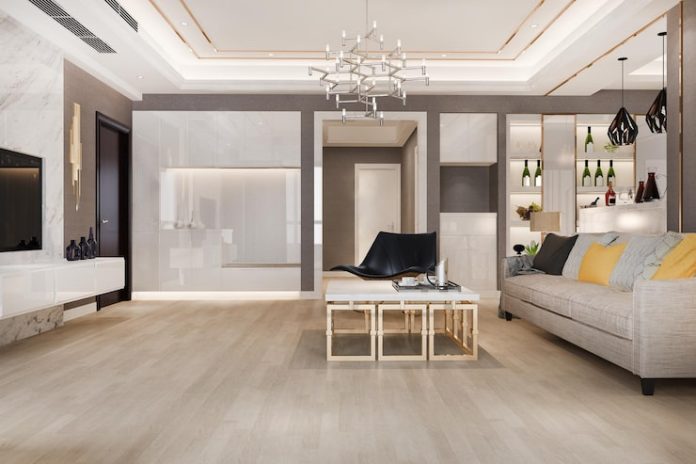

Luxury vinyl plank flooring — LVP for short — has genuinely earned its place as one of the most popular flooring choices in home renovation. A decade ago, vinyl flooring had a reputation problem: it meant cheap-looking, brittle sheet flooring that bubbled at the edges and looked nothing like the wood it was imitating.
Today’s luxury vinyl plank flooring is a different product entirely. The realistic wood-grain embossing, waterproof core construction, and durability numbers have made it a legitimate competitor to hardwood in many situations. Here’s an honest, detailed look at what you’re actually getting.
What Makes Luxury Vinyl Plank Different from Standard Vinyl
Standard vinyl flooring is a thin, flexible sheet product. Luxury vinyl plank flooring is a multi-layer, rigid-core plank — typically 4 to 6 millimeters thick — that installs as individual boards, just like hardwood or laminate.
The layer structure typically consists of:
- Wear layer: The transparent top coat that protects against scratches, stains, and scuffs — measured in mils (thousandths of an inch)
- Vinyl print layer: A high-resolution photographic layer that mimics wood, stone, or tile
- Core layer: Either WPC (wood plastic composite) or SPC (stone plastic composite) — this is what gives LVP its rigidity and feel underfoot
- Underlayment backing: Often pre-attached; provides cushioning, sound dampening, and subfloor imperfection tolerance
WPC vs. SPC: Which Core Is Right for You?
WPC (Wood Plastic Composite)
WPC cores contain a foamed polymer that makes them slightly softer and warmer underfoot than SPC. They’re more comfortable for extended standing and feel closer to real hardwood. Slightly less dimensionally stable than SPC in extreme temperatures, but more than adequate for most residential applications.
SPC (Stone Plastic Composite)
SPC cores are denser and harder — more dimensionally stable across temperature fluctuations, which makes them better suited for areas with significant temperature swings (like sunrooms or spaces over radiant heating). They’re thinner at the same millimeter count than WPC, which can be advantageous in rooms where floor height transitions matter.
Wear Layer Thickness: Don’t Ignore This Number
The wear layer is the single most important quality indicator in luxury vinyl plank flooring. It determines how long the floor will look good under real use.
- 6 mil wear layer: Entry-level residential — suitable for very low-traffic areas
- 12 mil wear layer: Standard residential — appropriate for most rooms in a typical home
- 20 mil wear layer: Heavy residential and light commercial — the right choice for homes with dogs, kids, or high foot traffic
- 28 mil and above: Commercial-grade — virtually indestructible in home settings
If a manufacturer is vague about wear layer thickness, that’s a red flag. Reputable LVP manufacturers specify this number clearly.
Installation: Click-Lock vs. Glue-Down
Most residential luxury vinyl plank flooring uses a floating click-lock installation — the planks interlock without adhesive and essentially float above the subfloor. This is DIY-friendly, allows for natural expansion and contraction, and can be removed without damage to the subfloor later.
Glue-down LVP is adhered directly to the subfloor — more stable in environments with significant temperature fluctuations but harder to install and harder to remove. It’s typically specified for commercial applications.
Where Luxury Vinyl Plank Flooring Excels
- Kitchens and bathrooms: The 100% waterproof core handles splashes, spills, and humidity that would destroy real hardwood
- Basements: LVP is appropriate for below-grade installation where moisture levels disqualify solid hardwood
- Homes with pets or children: The wear layer resists scratches from claws and the inevitable dropped toys
- Rental properties: Durability, easy cleaning, and relatively low cost make it excellent for high-turnover properties
Where It Falls Short
- In homes where real hardwood resale value matters: Some buyers and appraisers still distinguish between real wood and LVP
- In high-end design contexts: The most discerning interiors still reach for real stone and hardwood
- In very hot or cold spaces: Even the best SPC has thermal expansion limits — avoid uninsulated garages or sunrooms with extreme temperature swings
Pro Tip: Buy 10% more luxury vinyl plank flooring than your square footage calculation. You’ll need it for cuts, waste, and future repairs — and dye lots change between production runs, making matching planks harder to find later.