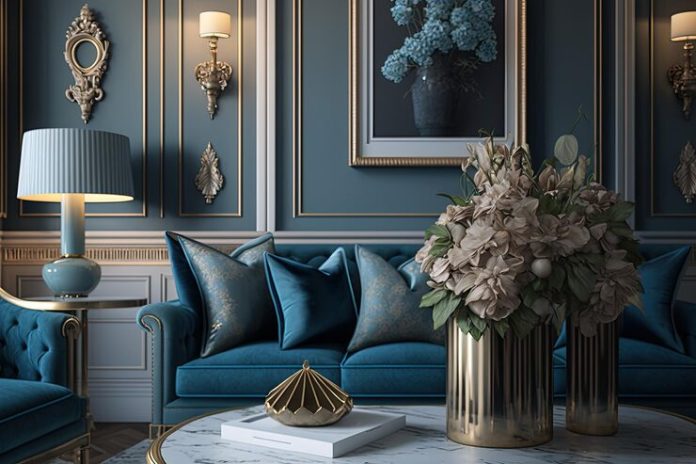

Art deco home decor has never really gone away — it’s just cycled in and out of fashion, which is what great styles do. Rooted in the 1920s and 1930s, art deco emerged as a reaction against organic Art Nouveau forms, embracing instead sharp geometry, opulent materials, and a confidence that bordered on theatrical.
The result was an aesthetic that felt modern, optimistic, and frankly a little intoxicating. And today, done with a contemporary hand, art deco home decor feels just as relevant as it ever did.
The Defining Characteristics
Before incorporating art deco into your home, it helps to understand its visual DNA:
- Bold geometric patterns: Sunbursts, chevrons, stepped forms, zigzags, and fan shapes
- Rich, contrasting color palettes: Black and gold, navy and brass, cream and chrome
- Luxurious materials: Lacquered surfaces, marble, brass, velvet, mirrored glass, ebony wood
- Symmetry: Art deco spaces tend toward strong, formal balance — everything in pairs or centered
- Ornamentation with purpose: Decorative elements that are integrated into structure, not tacked on
Color Palette for Art Deco Interiors
The art deco color palette is one of its most recognizable features — and most adaptable for contemporary use. The classic combinations include:
- Black and gold: The most iconic — dramatic, sophisticated, and works in almost any room
- Emerald green and brass: Rich and unexpected, perfect for a living room or study
- Cream and tortoiseshell: Warmer and more livable, great for bedrooms
- Navy and chrome: More masculine and contemporary, ideal for home offices
You don’t need to commit fully to any of these. Even introducing one art deco color pairing through accessories and accent pieces goes a long way.
Furniture: Form Meets Function, Dramatically
Art deco furniture is characterized by bold silhouettes, tapered legs, and a certain heaviness of form that commands attention. Look for:
Geometric Upholstered Pieces
Curved sofas, fan-back chairs, and armchairs with strong architectural shapes in velvet, brocade, or leather. Jewel tones — emerald, sapphire, deep burgundy — are the most period-appropriate upholstery choices.
Lacquered and Mirrored Surfaces
High-gloss lacquered side tables, mirrored dressers, and bar carts with chrome or brass accents are classic art deco furniture pieces that translate beautifully into contemporary interiors.
Sunburst Mirrors and Clocks
The sunburst motif is perhaps the most widely recognized symbol of art deco design. A large sunburst mirror above a fireplace or console table is one of the most impactful single pieces you can add.
Lighting: The Art Deco Signature
Art deco lighting is some of the most beautiful ever produced. Look for:
- Tiered or geometric chandeliers in brass, bronze, or chrome
- Torchiere floor lamps with frosted glass shades
- Table lamps with stepped bases and geometric shades
- Wall sconces with fan or stepped geometric forms
Pro Tip: The easiest way to bring art deco into any room is through lighting. A single statement chandelier or pair of brass wall sconces transforms the character of a space immediately.
Balancing Art Deco in a Contemporary Home
The danger with art deco home decor is going too heavy — turning a living room into a set from The Great Gatsby rather than a place you want to come home to every day. The solution is restraint and mixing.
Choose two or three strong art deco elements — a statement mirror, a velvet chair, a brass light fixture — and let the rest of the room breathe. Let your walls be simpler, your other furniture more understated. The art deco pieces will shine precisely because they’re not competing.
Art deco, at its best, is about the conviction that everyday spaces deserve beauty. That’s as relevant now as it was a century ago.